
Preparing kids for a trip: 9 tips for excitement instead of stress
“Are we there yet?” Young children find it hard to imagine time and distance. Knowing what is coming makes travelling more relaxed. These nine tips help children aged 4 to 8 look forward to the trip.
By Mario Deubler · Updated:
Why preparation helps children
For children aged 4 to 8, a trip is full of unknowns: a strange bed, long journeys, new rules. Abstract figures like “six hours” or “400 kilometres” mean little to them. What they already know makes them less anxious. Good preparation turns the trip into pictures, steps and stories.
1. Tell them early, but not too early
For younger children, a week is already a long time. Tell them about the trip fairly shortly before. Older children also enjoy a longer build-up. What matters is being concrete: where are we going? Who is coming? Where will we sleep?
2. Make a countdown
A paper chain where you cut off one ring every day, or a calendar to tick off. This makes “in ten days” something they can grasp, and your child can answer “How much longer?” on their own.
3. Show the route on a map
Print a simple map or draw one yourselves. Draw in the route and put a sticker on every larger town. Children understand “we'll pass three towns” much better than a number of hours. For the length of the journey, familiar comparisons help: “As long as two films”.
4. Get to know the places along the way
What is there to see on the way? A castle, a cathedral, a big river? Look at pictures beforehand. On the way, looking out of the window then becomes seeing old friends again.
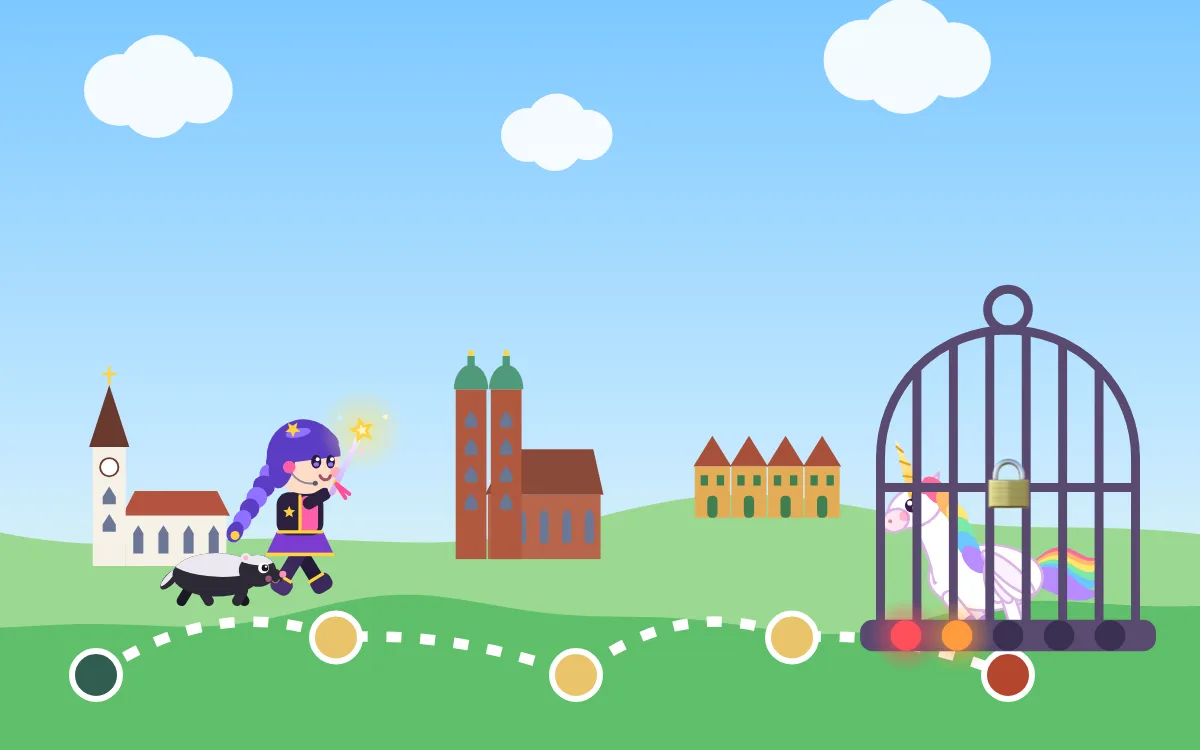
That is exactly why we built mapumi: you choose your home town and your destination in Germany, Austria or Switzerland. The game suggests three real places in between, shows landmarks and offers small tasks. The places may differ from your route by car or train. Maybe one of the names will turn up on a sign later. Please note that the game itself is in German: every sentence is read aloud in German, so it suits children who speak German or are learning it.
5. Let them pack their own rucksack
A small rucksack of their own gives children responsibility and something familiar for the journey. Pack it together and let your child help decide:
- Cuddly toy or comfort blanket
- Water bottle and a few snacks
- A picture book or audio story
- Drawing pad and pencils
- A change of clothes and wet wipes
6. Act out the travel day beforehand
Line up chairs as a train and play conductor. If you are flying, explain what happens at the security check. Talk about where you will take a break and what there will be to eat. Children who know the plan feel safer on the travel day.
7. Plan breaks in advance
On long car journeys, regular breaks help, for example every two hours. Plan breaks at places with a playground or a meadow so the children can move around. If your child can see the breaks on the map, the long journey becomes a series of short stages.
8. Screen-free games for the road
- I spy with my little eye. The classic, and with colours it works even for four-year-olds.
- Counting cars. Everyone picks a colour. Who has counted the most after ten minutes?
- Guessing number plates. Where is the car in front of us from? Exciting for older children.
- Continuing a story. Everyone adds one sentence, and the story gets sillier and sillier.
- Audio stories and songs. Save a few new episodes for the journey.
9. Use screen time deliberately
A tablet can help on long journeys. Content with a clear ending, no advertising and no purchases is better than endless videos. If your child gets carsick easily, look out of the window together instead and save the game for the break or for the days before the trip.
After the trip: keep the memories
Stick photos, tickets and postcards into a small travel book. Ask your child what they liked best. That way the trip becomes a story they will tell for a long time. And the next trip starts with excitement instead of worry.
Frequently asked questions
How early should I tell my child about the trip?
For younger children a week is often enough, otherwise the wait becomes too long. Older children also enjoy a longer countdown. What matters is telling them concretely where you are going and who is coming.
What helps against “Are we there yet?”
Split the journey into stages your child can see: places on a map, breaks with a playground, one audio story per stage. That way your child can see for themselves how far they have come.
How does the travel game work for our holiday?
You choose your home town as the start and your holiday destination as the end. The game suggests three real places in between based on their geographical location. These may differ from your route. It is best for your child to play the trip in the days before you leave.
Does it work for a holiday in Italy or Croatia?
The start and destination must be in Germany, Austria or Switzerland. If you are travelling further, choose the last larger town before the border as your destination.
Does your child need to be able to read for this?
No. Every sentence in the game is read aloud. Place names are also shown on screen, to look at together.